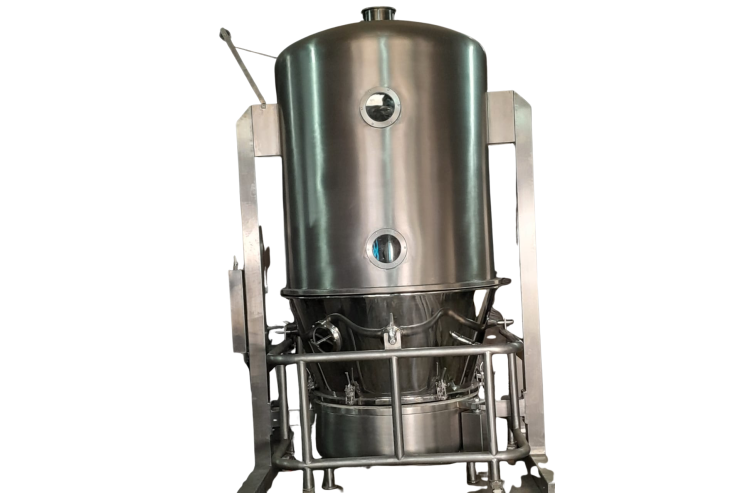
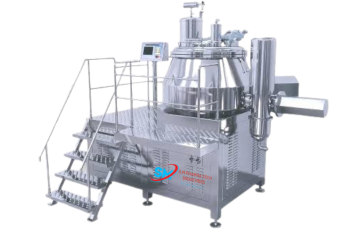
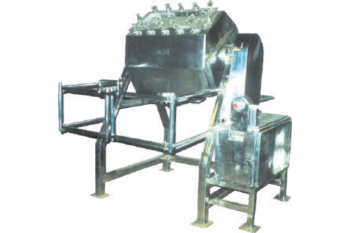
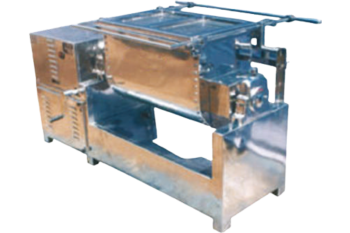
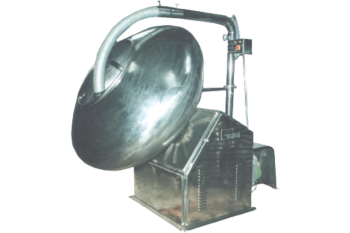
Pneumatic Lifting Device for Product Container Explosion Proof Design.
Contact parts SS 316 & Non Contact parts SS 304.
Available Fully GMP Model.
Provided Electric Control Panel.
PLC Operation (Optional).
🔧 Typical Fluid Bed Dryer Specifications (Industrial Scale)
General Working Principle
Uses hot air blown up through a perforated bed to suspend (fluidize) solid particles in a gas stream. This increases surface area exposure for fast, uniform drying.
Common Construction & Features
Material: Stainless steel (SS 304 / SS 316) for hygienic applications (pharma/food).
Control: Temperature & airflow controllers, often PLC-based.
Safety: Explosion safety flap, earthing to prevent static.
Filters: Optional HEPA dust filters (on demand).
Performance & Operating Parameters (typical)
Capacity: varies widely (small lab models to > 500 kg/batch for industrial).
Airflow & Pressure: Custom-designed based on material and throughput. For example, technical units may have blower motors ~7.5 HP and airflow in the hundreds of CFM.
Steam/Heat Source: Steam pressure ~3.5 kg/cm² in steam-heated models.
Temperature Range: Adjustable depending on product thermal tolerance.
Batch / Continuous: Designs available for both batch and continuous operation.
Applications
Pharmaceuticals (granules/powders)
Food products & starch derivatives
Chemicals, pesticides, phyto-chemicals
Fertilizers & biomass drying
Variants
Standard Fluid Bed Dryer (FBD): Basic drying of powders/granules.
Vibratory Fluid Bed Dryer: Adds vibration to improve fluidization of difficult materials.
Multi-function Fluid Bed Dryers: Some models also support spray granulation or coating when fitted with spray guns.
🧠 How It Works (Simplified)
Hot air enters from the bottom through a perforated plate.
The material becomes fluidized — particles behave like a fluid.
Heat transfers efficiently, moisture evaporates and exits via exhaust.